
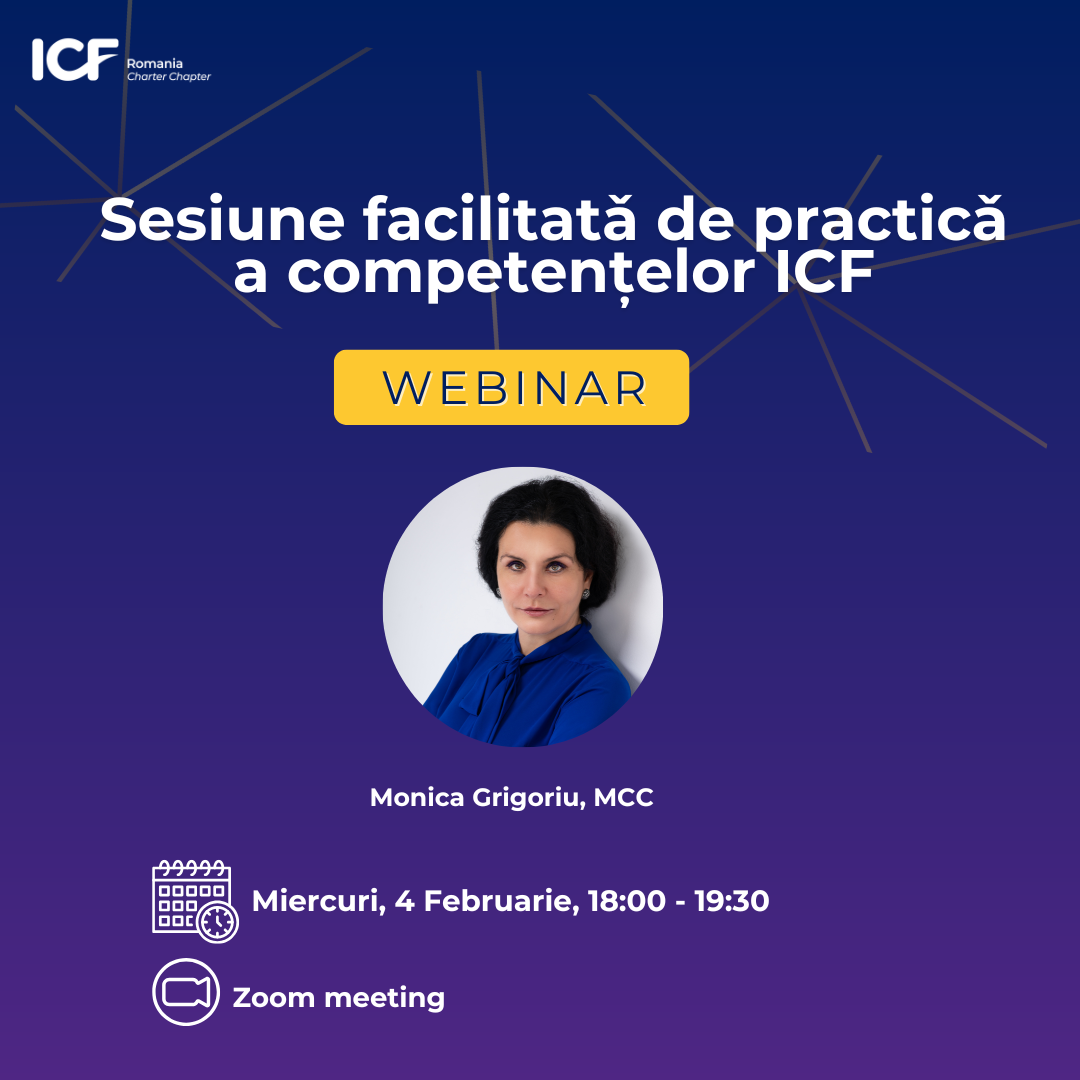
Practice sessions for the ICF core competencies
How do I share what I observed at my coachee during a coaching session?
A 90-minute Supervision Coaching session brief (ICF Core Competency 4: Cultivates Trust and Safety)
This 90-minute supervision coaching session supports coaches in sharing observations with coachees in a way that strengthens trust, protects psychological safety, and deepens client learning. Using ICF Core Competency 4 (Cultivates Trust and Safety) as our anchor, we will explore how to bring forward what we notice—patterns, shifts in energy, language choices, emotional cues, congruence/incongruence—without slipping into judgment, diagnosis, or “being right.” The focus is on partnering with the client: offering observations as neutral data, checking consent, and inviting meaning-making so the client stays empowered and resourced.
Participants will examine the difference between an observation (“I notice you looked away and your voice softened when you mentioned your manager”) and an interpretation (“You’re intimidated by your manager”). We will practice language that is respectful, tentative, and client-centered—especially in moments where the observation may feel sensitive. We will also address timing (when to share), tone (how to share), and choice (whether to share), including how to recover if an observation lands poorly.
The session is experiential and reflective: brief teaching, live practice, and peer learning through supervision-style inquiry. Coaches will leave with a simple, repeatable structure for naming observations, seeking permission, and co-creating exploration—while maintaining warmth, respect, and the client’s autonomy.
Learning objectives (for the coachees/coaches)
By the end of the session, participants will be able to:
- Explain how ICF Competency 4 (Cultivates Trust and Safety) guides the sharing of observations in coaching.
- Distinguish observations from interpretations, assumptions, and judgments in real coaching moments.
- Use consent-based, non-triggering language to offer an observation and invite client reflection.
- Apply a clear micro-framework to share observations (notice → permission → share → check impact → explore meaning).
- Demonstrate at least two repair strategies when an observation feels uncomfortable or is received defensively (e.g., acknowledge impact, re-contract, return choice to client).
This supervision session strengthens ethical, effective coaching presence by ensuring that what we notice becomes an invitation—not an imposition.